Developing a skill
You can't enter a tech discussion this year without acknowledging the elephant in the room: AI. The models, tools, interfaces, and interactions have progressed so fast over the last few weeks and months that it's difficult to keep up. What felt like it used to take years now seems to happen between one project and the next.
It's scary for a lot of people. There's a very real concern about where the human element fits into all of this. Nobody wants to be diminished to a "meat proxy," passing information between systems without contributing anything of their own.
I've been in technology for over three decades and have witnessed the ebb and flow of rising technologies and fading trends. And then there's VR, which seems to have its own tides.
Pandora's box has been opened. AI is here to stay. I feel it is best used as a tool, and using it well takes some work.
While it's amazing what it can do, context still matters. As does expertise.
The workshop keeps changing
Making a charcuterie board sounds straightforward enough. Pick some attractive wood, glue it together, cut it to shape, sand it, and apply a finish.
There's a fair amount hiding inside that sentence.
A good glue-up starts well before you reach for the glue. You need to understand the material and how to prepare it. You need to know what the table saw, planer, and jointer each contribute, and how to use them. Then there are the clamps.
I do seem to accumulate clamps.
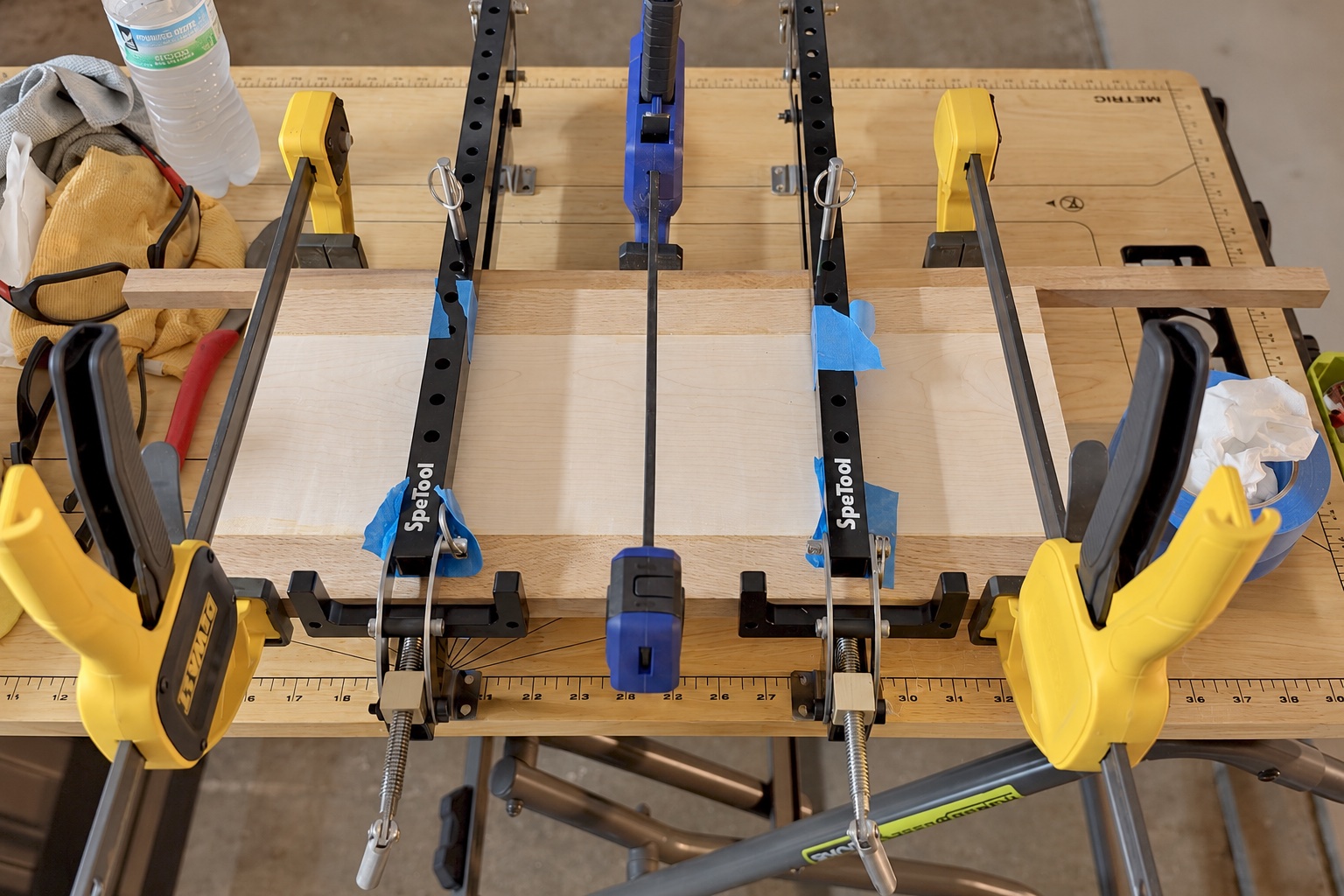
There's a fair amount hiding inside 'glue it together.'
Early attempts can be rough. You're learning the tools while also learning how to recognize whether you've used them well. With practice, you start noticing things earlier. You catch a problem while there's still an opportunity to fix it.
Add a laser cutter or engraver to the workshop and there's another set of things to learn. Preparing the design, choosing settings, understanding how a particular material responds. Owning the machine gets you started. Getting clean, repeatable results takes experience.
I'm going to leave the "what counts as woodworking" debate for someone else. The workshop has evolved, and the tools available to us enable some incredible output. There's still a person making decisions at every step.
Expressing an idea requires having one
Early in my CAD/CAM journey, I started learning OpenSCAD. I loved the thought of expressing a three-dimensional object as code. That appealed to the software part of my brain immediately.
I also made the mistake of throwing AI at the problem before I understood some of the fundamentals.
I had ideas, but I couldn't always describe them clearly. I didn't yet understand enough about modeling to explain how the pieces should relate or which constraints mattered. Sometimes I hadn't really decided what I wanted.
So I asked AI.
This was occasionally the technical equivalent of a couple trying to decide where to eat. "What do you want?" "I don't know. What do you want?"
Except one participant will happily produce a substantial amount of code while the question remains unanswered.
That can feel like progress. There's output. There's something to run, inspect, and react to. Experimenting that way can help you discover what you want, too. But I was also asking the tool to fill gaps in my understanding without being equipped to evaluate what it put there.
I could ask for changes. Explaining why those changes were needed was harder.
That was something I needed to learn.
Clean output requires a clean signal
The more clearly I understand what I'm trying to achieve, the better I can explain it. That includes the constraints, the reasons behind them, and what a successful result should look like.
Put plainly: shit in, shit out.
That applies to more than the wording of a prompt. A clearly written request can still contain a bad assumption. I can give very precise directions toward something that won't work.
Experience helps me recognize that. Learning the fundamentals gives me a way to question the result, discuss a tradeoff, or notice when something important has been missed.
Writing an AI skill brings up the same questions. Writing down a process forces me to examine things I might otherwise do automatically. What information do I need before starting? Which steps depend on earlier decisions? What should I check before calling the work finished?
"Make a good charcuterie board" leaves quite a bit open to interpretation.
So does "write good code."
A useful skill needs some of the knowledge behind those requests. Developing it means taking the time to articulate that knowledge, try it, inspect the result, and refine it. The instructions improve as my understanding improves.
There's still something to learn
I understand the uneasiness around all of this. I feel some of it myself. The pace of change makes it tempting to either dismiss the tools or assume we should hand everything over to them.
I want to keep making things. I also want to understand what I'm making.
That means spending time with unfamiliar tools, accepting some rough early attempts, and learning enough to have a useful discussion about the work. It means contributing my own judgment instead of simply passing an answer along.
The experience we already have gives us somewhere to start. There's also value in being a beginner again.
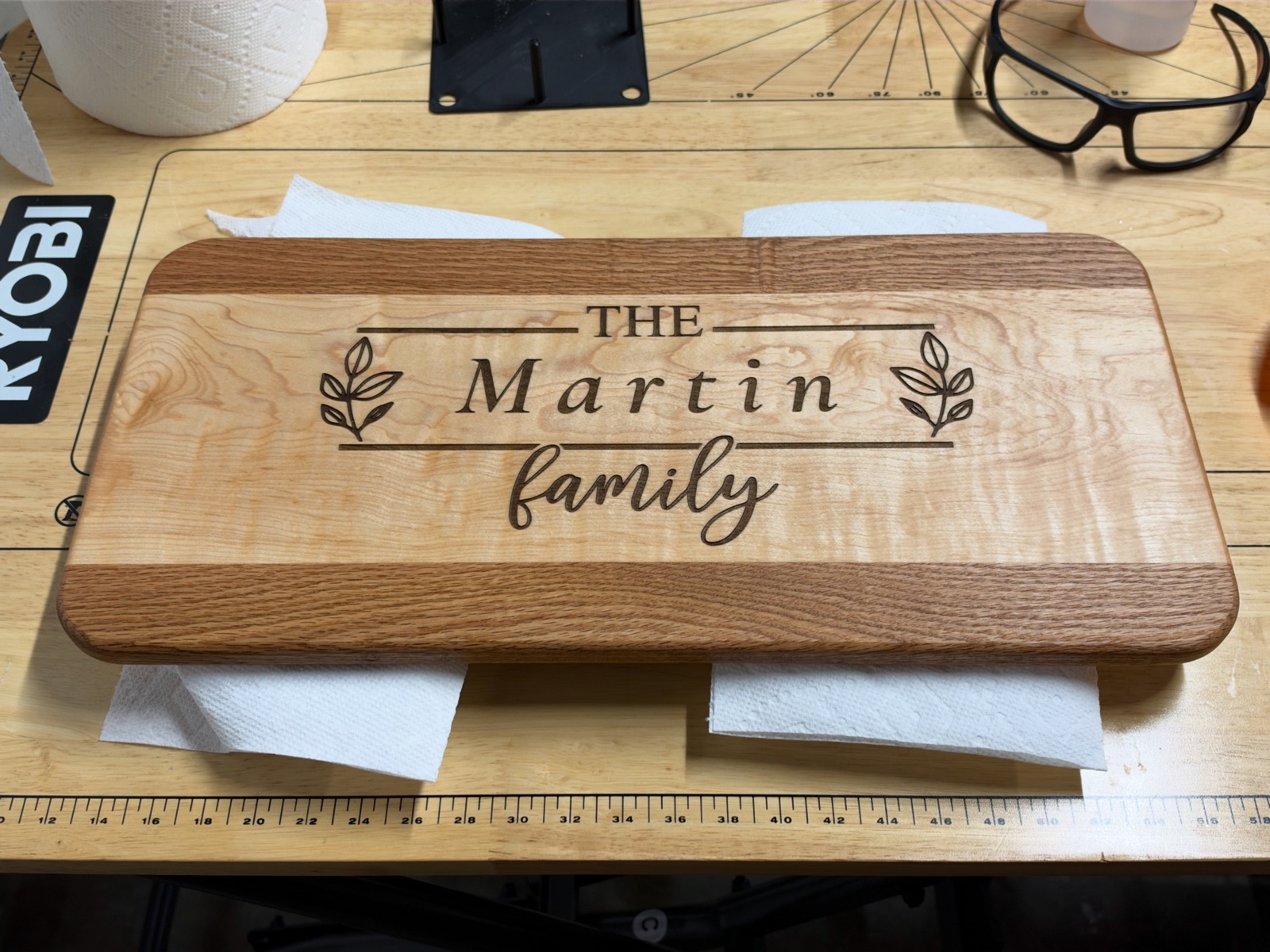
The finished board.
I've been building things for decades. I still have plenty to learn.