
Building my own Steam Machine
I liked the idea behind Valve's Steam Machine: a compact gaming PC for the living room, with my Steam library ready to go on the television. A portal to Steam, if you'll allow me one Valve pun.
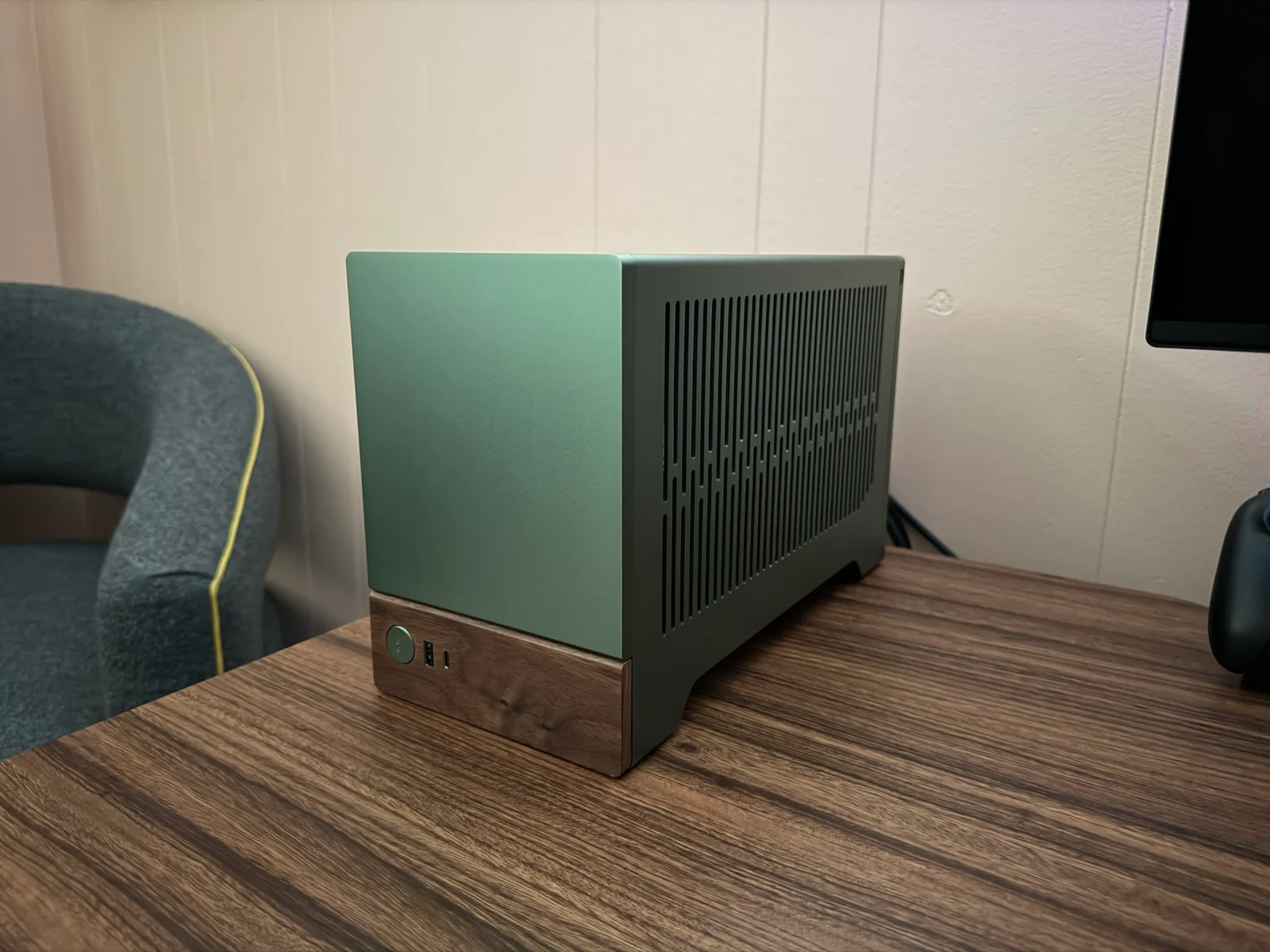
The finished build, with everything tucked away.
What I hoped for was an affordable way to get that experience. Unfortunately, this is a difficult time to buy PC hardware. Between people building gaming systems, enthusiasts running AI models at home, and the much larger appetite for AI infrastructure, there's a lot of competition for components. Memory and storage have been particularly painful. Valve's launch announcement discusses how component costs affected the Steam Machine's price, too.
That made me take another look at what I already owned.
A good excuse to use the spare parts
I had a Ryzen 7 5800X3D, RAM, and storage sitting around. Putting them back to work made the additional investment much easier to justify. My out-of-pocket cost was relatively small because I'd already bought some of the expensive parts.
That's an important detail if you're looking at this as a build to copy. Buying everything today would be a different calculation. For me, though, it was an opportunity to build a more powerful machine around hardware that was otherwise collecting dust.
Here's the finished configuration:
| Component | My build |
|---|---|
| CPU | AMD Ryzen 7 5800X3D |
| CPU cooler | Thermalright AXP120-X67 |
| Motherboard | Gigabyte B550I AORUS PRO AX |
| GPU | ASUS Prime Radeon RX 9070 XT 16GB |
| Memory | 32GB G.SKILL Ripjaws V |
| Storage | Samsung 990 PRO 1TB and Samsung 970 EVO 2TB |
| Case | Fractal Design Terra in Jade, with walnut detailing |
| Power supply | Cooler Master V850 SFX Gold 850W |
| Operating system | SteamOS |
I keep the parts list and troubleshooting notes in this gist. The component links are there if you want a closer look.
The hardware gives this build considerably more graphics headroom on paper than Valve's machine. I haven't done a controlled comparison; what matters to me is that it runs great and gives me the living room gaming PC I wanted.
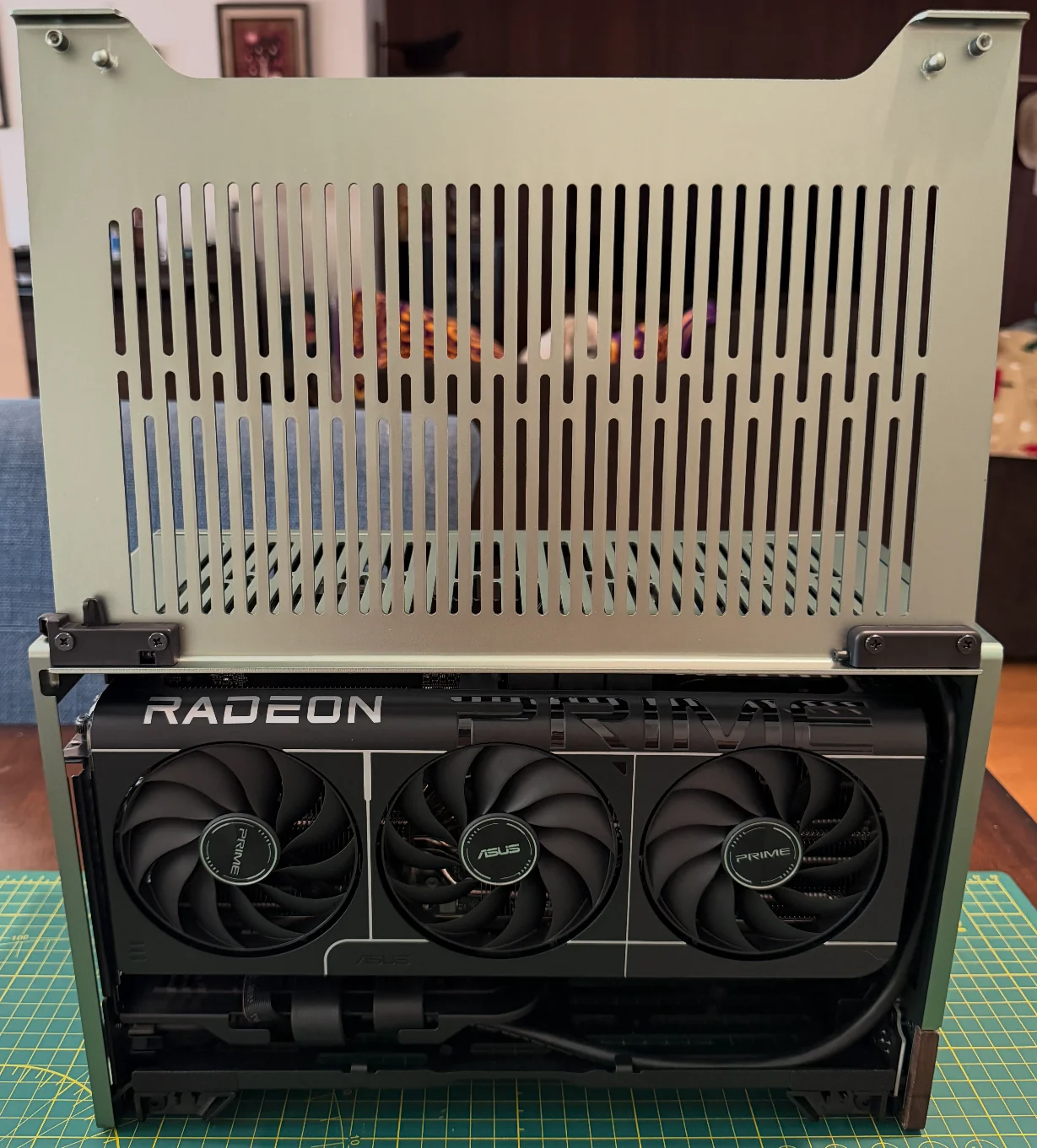
The graphics card gets one side of the Terra to itself.
Thirty-five years in, something new
I've been building my own PCs for more than 35 years, but this was my first small form factor build. It turns out there's still plenty of room to learn, even when there's very little room in the case.
The Terra appealed to my appreciation for well-designed hardware. The green finish and walnut detailing certainly didn't hurt, either. I spend enough time making things out of wood that a little walnut on a computer feels right at home.
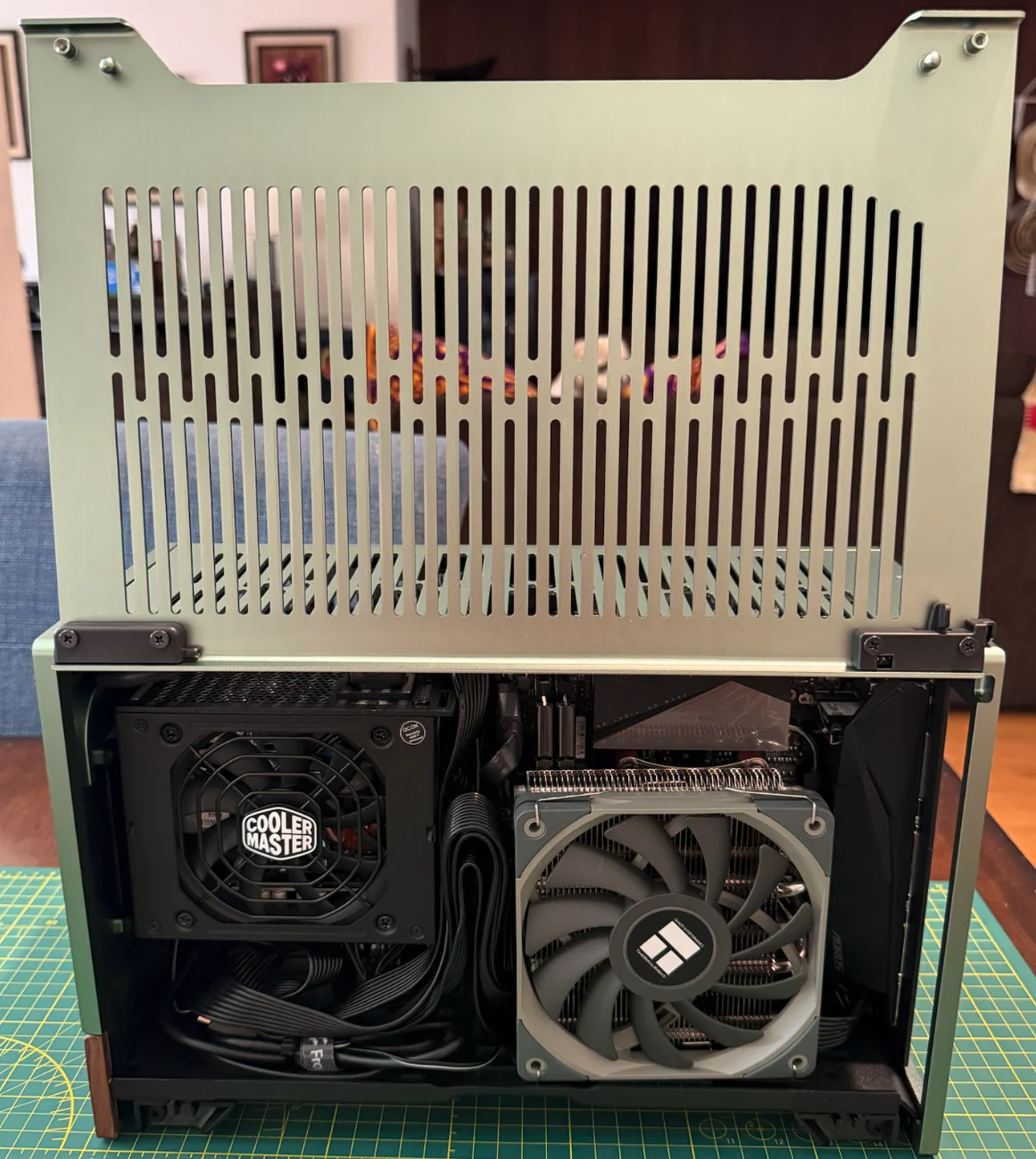
The other side: power supply, motherboard, CPU cooler, and a little room for the cables.
Working in that form factor was fun. It also gave my cable management habit somewhere to really express itself.
I do love a zip tie.
In a small case, deciding where a cable goes becomes a much bigger part of the job. There were frustrating moments, but getting everything arranged neatly was also one of the most rewarding parts of the build. The limited space made the finished result feel especially satisfying.
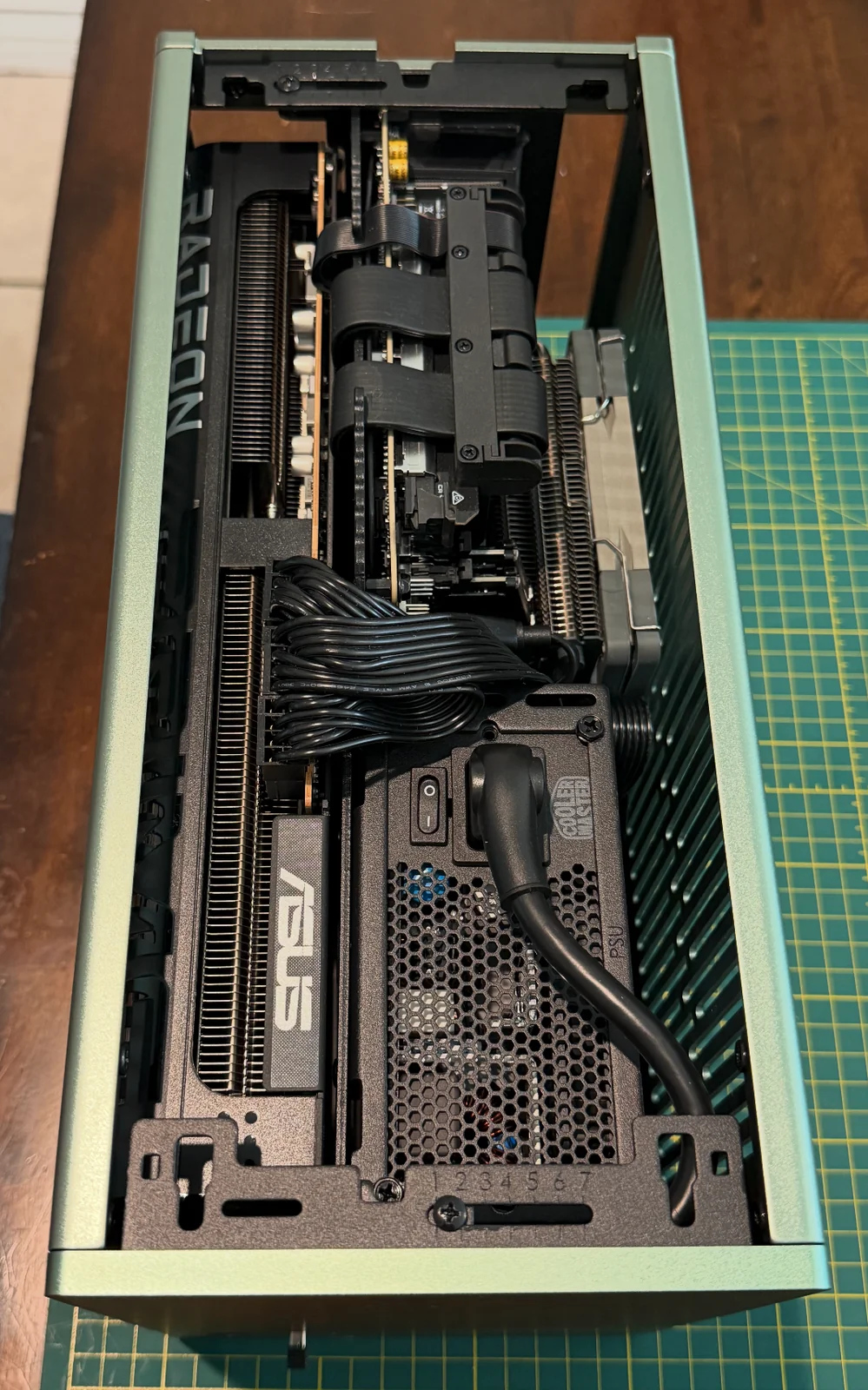
A view from above. Every cable needs somewhere to go.
Built, running, and worth the effort
Overall, this was a fun project, and I'm very happy with how the machine runs. I got to put existing hardware to use, try a different kind of build, and make something that fits what I wanted from a living room gaming PC.
After all these years, building a computer still scratches the same itch as woodworking or writing software: taking a collection of parts and turning it into something useful. This time, it just came in a much smaller box.